If your team works in Sri Lanka, fabric choice is not a style preference — it is a comfort and productivity decision. Colombo’s climate is warm and humid year-round: research on metropolitan office buildings reports mean monthly temperatures roughly in the mid-to-high 20s °C, with relative humidity commonly around 70–80% (and higher in monsoon months). That combination slows sweat evaporation, so a uniform that feels fine in a dry air-conditioned lobby can feel heavy on a gate post, kitchen pass, or mid-day delivery run.
What the climate demands from fabric
Occupational heat-stress guidance is consistent across tropical workplaces: prefer lightweight, breathable, light-coloured clothing that supports sweat evaporation, and avoid unnecessarily heavy or impermeable layers when safety rules allow. Singapore’s Ministry of Manpower heat-stress circular and international occupational heat guidance both emphasise loose, light-coloured, breathable work clothing as a practical control — alongside hydration and rest breaks.
For uniforms, that translates into three practical rules:
- Weight (GSM) — lighter cloth for outdoor and mixed indoor–outdoor roles; slightly heavier cloth only where structure or durability is required
- Fibre blend — balance cotton comfort with polyester durability and faster drying
- Colour — lighter colours reflect radiant heat better for outdoor posts; darker colours hide stains for kitchens and industrial roles
Poly-cotton: why most staff uniforms use it
Industry fabric guides for workwear consistently recommend poly-cotton blends because they combine cotton’s softness and airflow with polyester’s strength, wrinkle resistance, and faster drying. Common commercial ratios are 65/35 (more durable, easier care) and 50/50 (more cotton feel and moisture absorption). Pure cotton can feel nicer on day one, but in high humidity it holds sweat longer and creases faster — a problem for teams that wash uniforms daily.
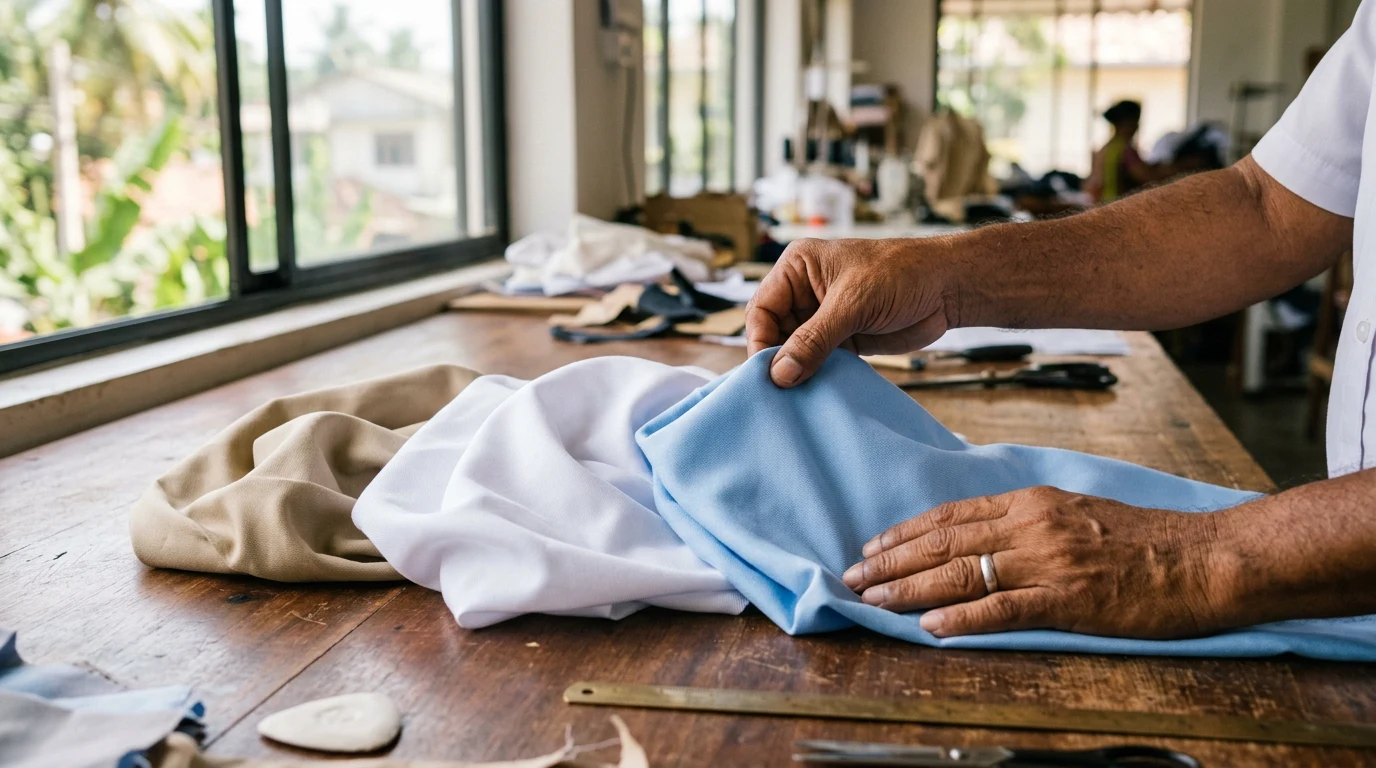
Textile research on tropical combat uniforms has also noted that pure cotton is not always optimal for thermal comfort in hot-humid climates, and that fibre structure, porosity, and finishing matter as much as the fibre name on the label. For procurement, that means: ask for blend %, GSM, and a wash sample — not just “cotton shirt.”
Practical GSM ranges for Sri Lankan roles
- 150–180 GSM — dress shirts, nurse tunics, spa tops, lightweight blouses for AC offices and guest-facing indoor roles
- 180–220 GSM — polos, duty shirts, many hospitality and security tops (structure without excessive heat load)
- 220–280+ GSM — chef coats, work trousers, coveralls, and garments that need abrasion resistance
A useful field test: have two staff wear candidate fabrics through a normal shift that includes outdoor transit. If the garment is still damp and heavy after an hour in humidity, it will fail your laundry cycle and your team’s patience.
Role-by-role recommendations
Corporate / retail (mostly AC)
Prioritise appearance retention: 160–180 GSM cotton or poly-cotton shirts, poly-viscose trousers. Wrinkle resistance matters more than maximum breathability because staff spend most of the day indoors.
Hotel front office & F&B floor
Mixed environments — lobby AC, then outdoor arrivals. Poly-cotton shirts/vests around 180–220 GSM, with embroidery that does not stiffen the chest panel. See our hotel uniforms by role guide.
Kitchen
Heat from equipment dominates. Heavier drill or poly-cotton chef coats are normal; focus on fit that allows airflow at the neck and sleeves, and plan spare aprons per shift.
Healthcare
Scrubs and tunics need frequent hot washes. Poly-cotton at mid GSM is the usual compromise. Infection-control literature also stresses that work attire should withstand institutional laundering and should not be treated like casual clothing — see our nurse, scrub and lab coat buying guide.
Buying checklist
- Confirm blend % and GSM on the quote, not only the product photo
- Order a washable sample before bulk
- Match colour to role (light for outdoor heat; dark for stain-prone work)
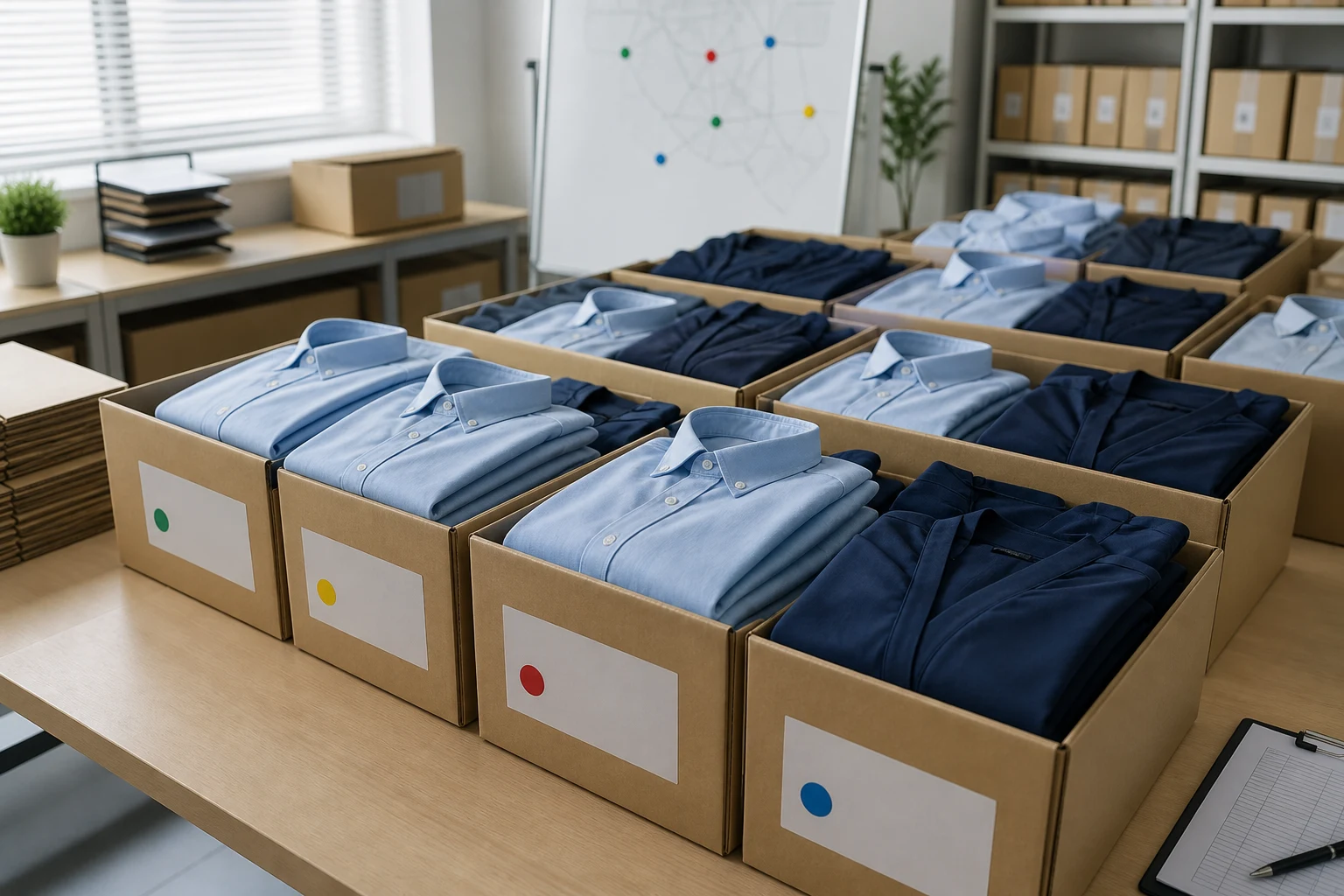
- Plan two sets per full-time staff member in tropical laundry cycles
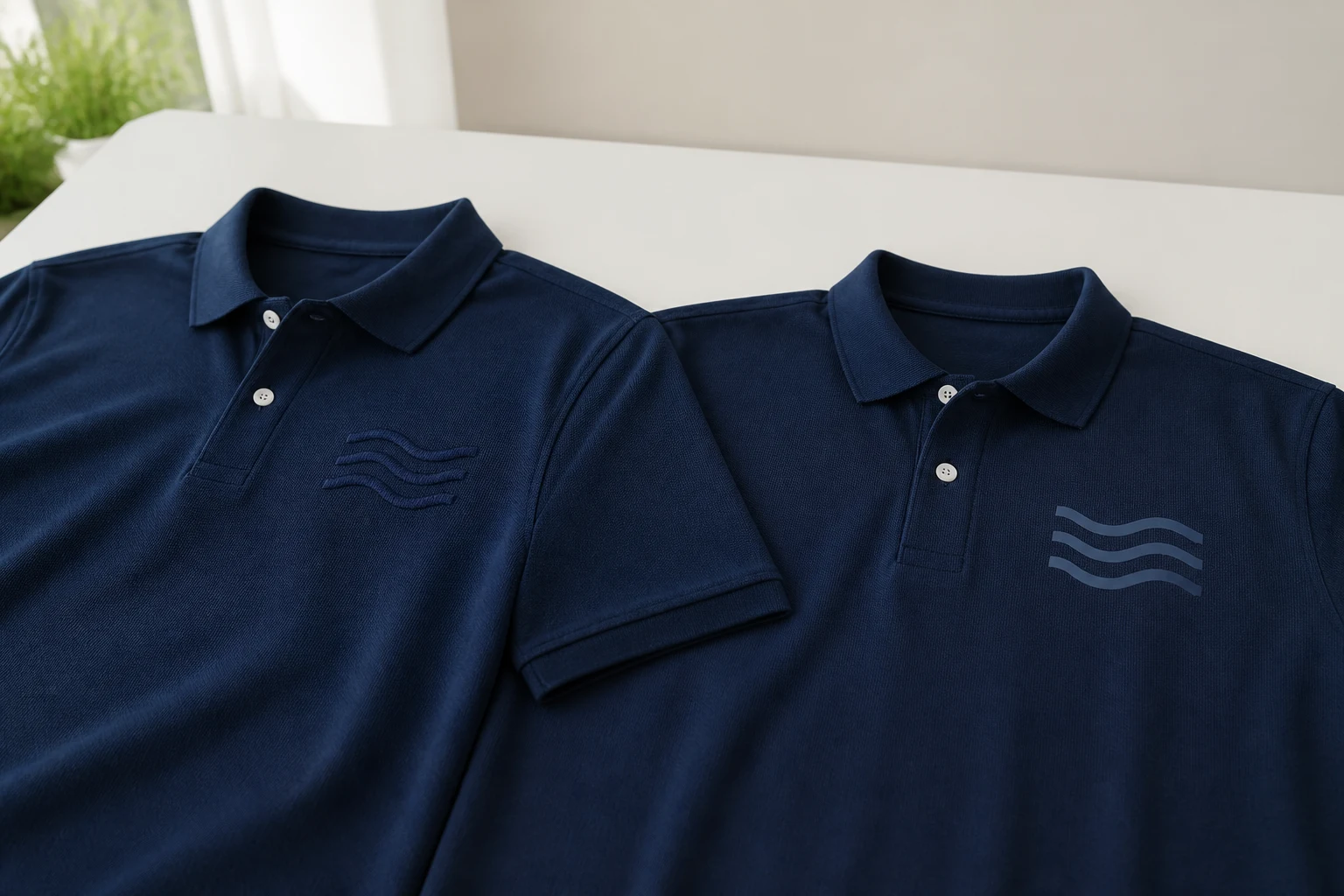
- Approve embroidery on the actual fabric — dense logos can reduce breathability locally
Browse breathable options in our catalogue, or request fabric advice with your headcount on the bulk orders page. Call +94 77 771 3314.
References
- Pathirana, S.M. et al. “Heat Stress Pattern in Conditioned Office Buildings… in Metropolitan Colombo.” Buildings 9(2):35 (2019). doi:10.3390/buildings9020035
- Singapore Ministry of Manpower. Circular on managing heat stress in the workplace (workers should wear loose-fitting, light-coloured clothing in hot environments).
- Global Heat Health Information Network / occupational heat guidance — employers should provide loose, light-coloured, breathable work clothing where appropriate.
- Knowing Fabric. “The Ultimate Guide to Poly-Cotton for Workwear and Uniforms” — common 65/35 and 50/50 blends for durability vs comfort. knowingfabric.com
- Textile Research Journal (2025). User feedback and textile analysis of thermal comfort factors of Royal Brunei Armed Forces uniforms in a tropical climate — notes limits of pure cotton and importance of fabric structure. doi:10.1177/00405175251343323