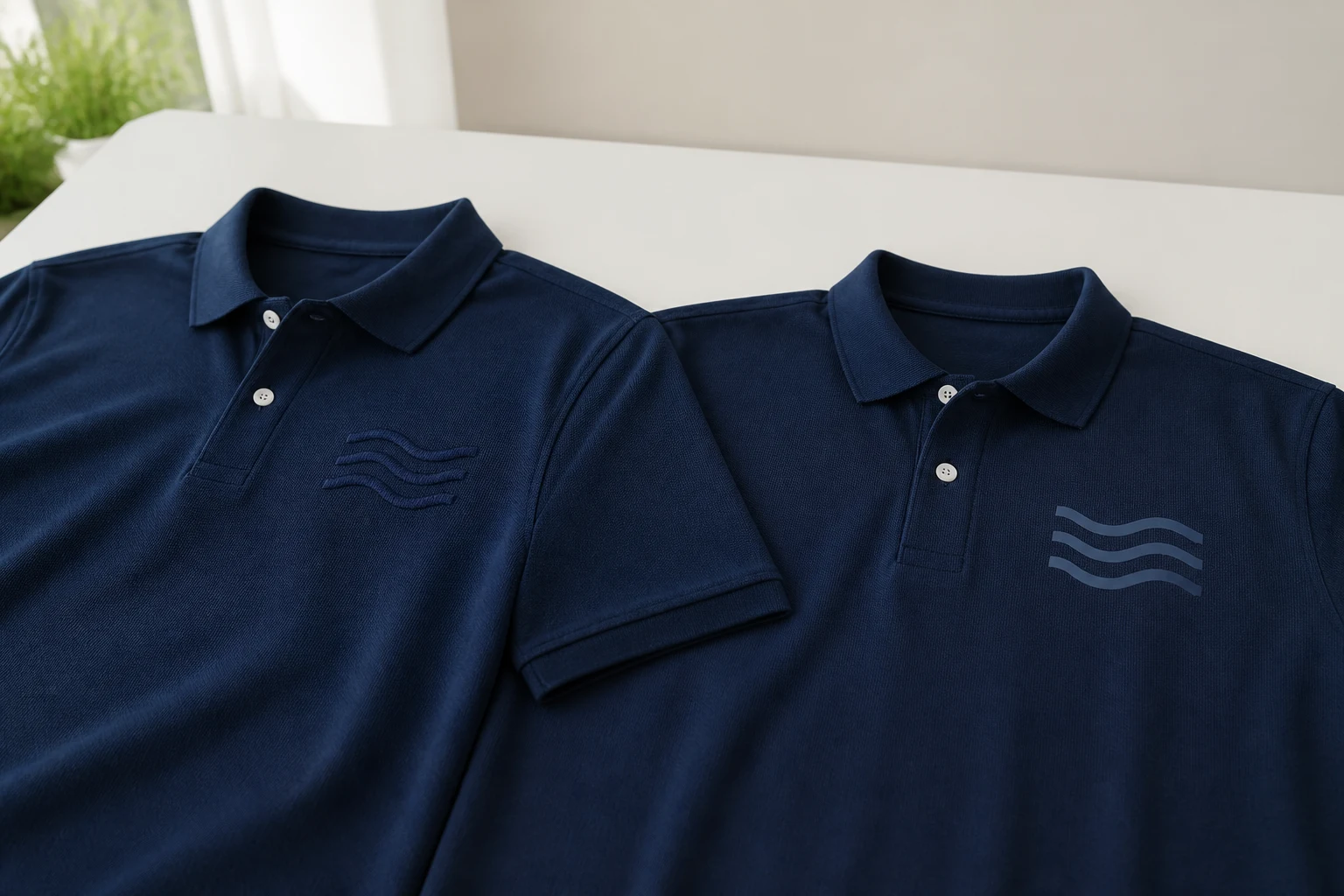

When HR managers budget for uniforms, they usually think about cost per garment. What gets overlooked is the tax side — and in Sri Lanka, the difference between providing uniforms and paying a cash clothing allowance can be significant for both the company and the employee.
Uniforms as a deductible business expense
Under Inland Revenue Department guidelines, clothing provided to employees specifically for work — where the garment is not suitable for everyday private wear — is generally treated as a business expense. For a company, that means the full cost of purchasing, embroidering and maintaining branded uniforms can typically be claimed as a 100% deductible expense in the year it is incurred.
This applies whether you are outfitting hotel front-desk staff, security guards, factory workers or corporate office teams. The key condition is that the uniform is clearly identifiable as work attire — branded with your company logo, in company colours, or in a style that would not normally be worn outside the workplace.
Provided uniforms vs cash clothing allowances
Some employers offer a monthly clothing allowance instead of supplying uniforms directly. That allowance is typically treated as a taxable benefit under APIT (Advance Personal Income Tax) and PAYE rules. The employee pays tax on it; the employer handles withholding. Over a year, a Rs 3,000 monthly allowance adds Rs 36,000 to an employee’s taxable income — and the company still bears the administrative cost of processing it.
By contrast, when the company provides the uniform directly, the employee receives a tangible benefit without an additional tax liability on their payslip. The company deducts the full cost. For a team of 50 staff, switching from a cash allowance to company-provided uniforms can simplify payroll and reduce the total tax burden across the organisation.
PPE and safety gear write-offs
Industrial and safety-related workwear — hi-vis vests, coveralls, protective footwear supplied by the employer — falls under a similar treatment. These items are required for the employee to perform their duties safely, and the cost is a legitimate operating expense. For factories, construction sites and logistics operations in Sri Lanka, this is worth documenting properly in your accounts.
Keep purchase invoices, delivery notes and any customization records. If the Inland Revenue Department queries your expenses, clear documentation linking each purchase to a business purpose is what protects the deduction.
The marketing ROI of uniformed staff
Tax deductibility is only part of the picture. Uniformed employees are walking brand ambassadors — in hotel lobbies, bank branches, hospital corridors and retail floors across Colombo and beyond. Every customer interaction happens with your logo visible. That is marketing spend you would otherwise allocate to advertising, and it works for as long as the uniform is worn.
Research consistently shows that customers trust uniformed staff more than casually dressed employees in service settings. For Sri Lankan hospitality and healthcare businesses, where personal service is a competitive advantage, this trust translates directly into customer retention and referral.
Practical steps for finance and HR teams
- Work with your accountant to classify uniform purchases correctly in your chart of accounts
- Issue uniforms through a purchase order rather than reimbursing staff — this keeps the expense on the company side
- For bulk orders, retain the supplier invoice and any customization specification as supporting documents
- Review whether existing clothing allowances could be replaced with direct uniform provision at a lower net cost
Disclaimer
Tax treatment depends on your company’s specific circumstances, industry and how garments are provided to staff. This article is for general information only and does not constitute tax advice. Consult a qualified tax advisor or your company auditor before making decisions about uniform provision, allowances or expense classification.