
Choosing the right fabric for corporate uniforms is not just about how a shirt looks on day one. In Sri Lanka, it determines whether your team stays comfortable through a Kandy afternoon or a back-to-back meeting schedule in a Colombo high-rise. Understanding GSM, fibre blends and wash care will save you from uniforms that look sharp in the sample but fail after ten laundry cycles.
What GSM means and why it matters
GSM stands for grams per square metre — a measure of fabric weight. Higher GSM means a denser, heavier cloth. Lower GSM means lighter and more breathable. For corporate uniforms in Sri Lanka, the right GSM depends on the garment and the working environment.
- 150–180 GSM — ideal for dress shirts and lightweight blouses. Breathable enough for tropical offices with air conditioning, structured enough to hold a collar and accept embroidery cleanly.
- 200–240 GSM — the sweet spot for polos and trousers. Polos at this weight keep their shape after repeated washing; trousers resist creasing during long commutes.
- 250+ GSM — reserved for blazers, overalls and outer layers. Heavy enough for durability on factory floors or for a structured corporate jacket, but too warm for all-day wear in unshaded outdoor posts.
Common fabric blends explained
Cotton twill
A staple for corporate shirts and trousers. The diagonal weave gives durability and a subtle texture that reads as professional. Pure cotton twill breathes well but creases easily — fine for office teams with access to pressing, less ideal for field staff.
Pique knit
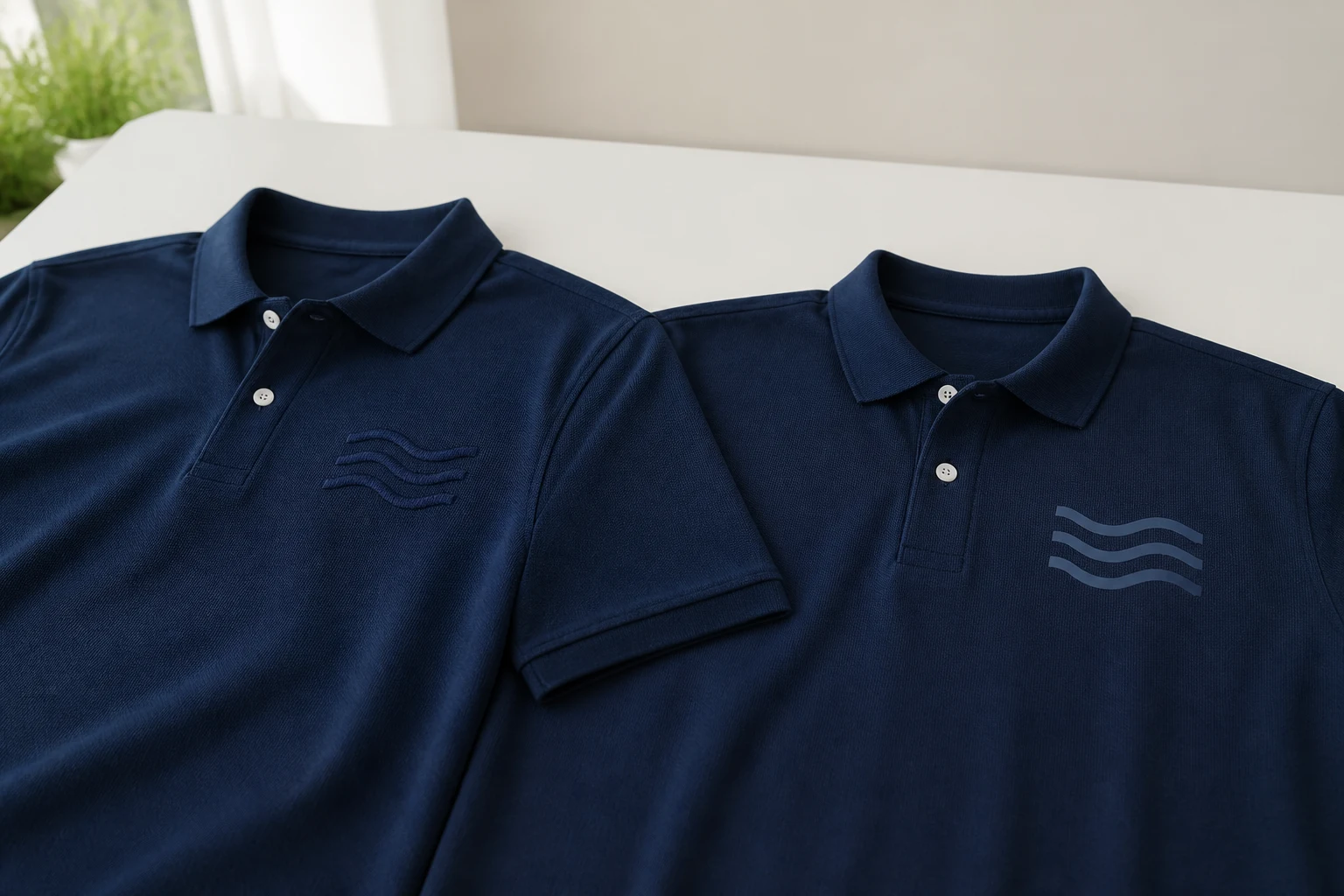
The standard for polo shirts. The textured knit allows air circulation and hides minor wrinkles. At 200–220 GSM, a good pique polo is the workhorse of corporate casual uniforms — banks, tech companies and retail teams across Sri Lanka rely on it daily.
Poly-viscose blends
Typically a 65/35 or 55/45 polyester-viscose mix. The polyester adds wrinkle resistance and colour fastness; the viscose adds softness and drape. These blends are popular for trousers and suiting separates because they hold a crease through a full working day without feeling stiff.
Linen blends
Pure linen is breathable but creases within minutes in Sri Lankan humidity. A linen-cotton or linen-viscose blend (usually 30% linen or less) gives you the cooling benefit without the crumpled look by lunchtime. Suitable for hospitality front-of-house and outdoor event staff.
Sri Lanka’s climate: outdoor heat vs air-conditioned offices
Most corporate teams in Sri Lanka split their day between air-conditioned offices and unshaded outdoor transit — tuk-tuk to the office, walk from the car park, a client visit across town. The uniform needs to work in both settings.
For predominantly indoor teams (banks, call centres, corporate HQ), a 160–180 GSM cotton or cotton-blend shirt is usually sufficient. The AC handles cooling; your priority is a crisp appearance and colour consistency across 200 identical shirts.
For mixed indoor-outdoor roles (hotel staff, security, field sales), step up to moisture-wicking blends or lighter GSM fabrics. A 180 GSM cotton-poly shirt wicks perspiration faster than pure cotton and dries more quickly between assignments.
Wash care and longevity
Uniforms are laundered far more often than personal clothing — sometimes daily. Fabric choice directly affects how long they last.
- Machine wash at 40°C for most cotton and poly-cotton blends; 30°C for dark colours to prevent fading
- Avoid fabric softener on moisture-wicking blends — it coats the fibres and reduces performance
- Tumble dry on low or line dry; high heat breaks down elastic and shrinks cotton
- Press shirts inside-out to protect embroidery and logo printing
At Uniform.lk, we specify fabric weight and composition on every product page so procurement teams can match the material to the role. Request a sample before your bulk order — feeling the fabric and washing it once tells you more than any specification sheet.