When El Niño strengthens in the Pacific, Sri Lanka often feels it as hotter, drier stretches, stressed reservoirs, and longer days when outdoor and semi-outdoor staff struggle to cool down. Uniforms cannot stop the climate — but the wrong fabric makes heat stress worse, and the right one helps the body do what it is designed to do: lose heat through sweat evaporation.
This guide explains what El Niño means for local workplaces, what occupational health agencies say about clothing and heat, and how to choose staff uniforms that reduce hard effects on security, industrial, hospitality outdoor, delivery and field teams.
What El Niño does to working conditions in Sri Lanka
El Niño is the warm phase of the El Niño–Southern Oscillation (ENSO). It does not create a single “hot day” — it shifts seasonal rainfall and temperature patterns. For Sri Lanka, recent agricultural and climate reporting linked the 2023 El Niño strengthening (notably July–September) with drier-than-normal weather in the Yala season and severe pressure on irrigation water. USDA reporting noted that water capacity in many reservoirs dropped by around 60% during that dry spell — a signal of how harsh the outdoor environment can become for anyone working in sun, dust and limited shade.
Longer-term climate profiles for Sri Lanka also point to rising ambient temperatures and more days with dangerous heat indices. Under higher-emissions pathways, analyses such as the Weathering Risk Sri Lanka climate impact profile project substantial increases in Heat Index days above 35°C and more tropical nights (minimum temperatures above about 26°C) that stop the body recovering overnight. When nights stay hot, the next shift starts already fatigued — and heavy uniforms compound that load.
ENSO impacts on rainfall are complex (wetter or drier depending on season and whether an event is fast- or slow-decaying), but the workplace takeaway is stable: plan for hotter, more humid, or more radiant-heat exposure during El Niño-linked extremes, especially for outdoor posts.
How heat actually harms staff — and why fabric matters
The World Health Organization and World Meteorological Organization describe workplace heat stress as excess heat stored in the body from hot environments, hard physical work, and clothing that blocks cooling. During work in warm conditions, the main way humans lose heat is sweat evaporating from the skin. Heavy, multi-layer, or impermeable garments trap that moisture and raise core temperature faster.
WHO/WMO and ILO messaging on occupational heat is blunt about scale: more than 2.4 billion workers worldwide are exposed to excessive heat, with millions of heat-related occupational injuries each year. ILO heat-awareness materials list heavy or impermeable clothing alongside high temperature, high humidity, radiant heat and physical work as factors that raise the risk of serious heat illness.
Practical clothing guidance from ILO-linked heat materials is clear enough for any HR or procurement brief:
- Prefer long, loose-fitting, lightweight, breathable clothing where the job allows
- Use hats or neck covers for sun-exposed posts
- Combine clothing with shade, water, rest breaks and acclimatisation — fabric alone is not enough
Fabric choices that reduce El Niño heat load
1. Choose breathable blends over “thick looking professional”
For most staff uniforms in Sri Lanka, a mid-weight poly-cotton (often 50/50 or 65/35) outperforms pure heavy cotton in humid heat: cotton softens the hand-feel; polyester helps the cloth dry faster between sweat cycles and holds shape after frequent washing. Pure cotton can feel cooler for a short time, then stays wet and heavy — exactly when El Niño afternoons peak.
See our detailed guide: Best fabric for staff uniforms in Sri Lanka’s climate.
2. Keep GSM honest for the role
- Outdoor security, gate, car park, delivery — lighter duty shirts/polos (~180–220 GSM), not blazer-weight cloth for all-day sun
- Industrial yards — durable enough for abrasion, but avoid unnecessary lining; use hi-vis as a vest over a breathable base layer when possible
- Hotel outdoor / bell / pool — light colours, open weaves, spare sets so staff are never stuck in a damp morning shirt
- Kitchen — radiant heat from equipment is different from El Niño sun; still avoid overly thick coats when a lighter certified option exists, and rotate aprons
3. Colour is a heat control, not only branding
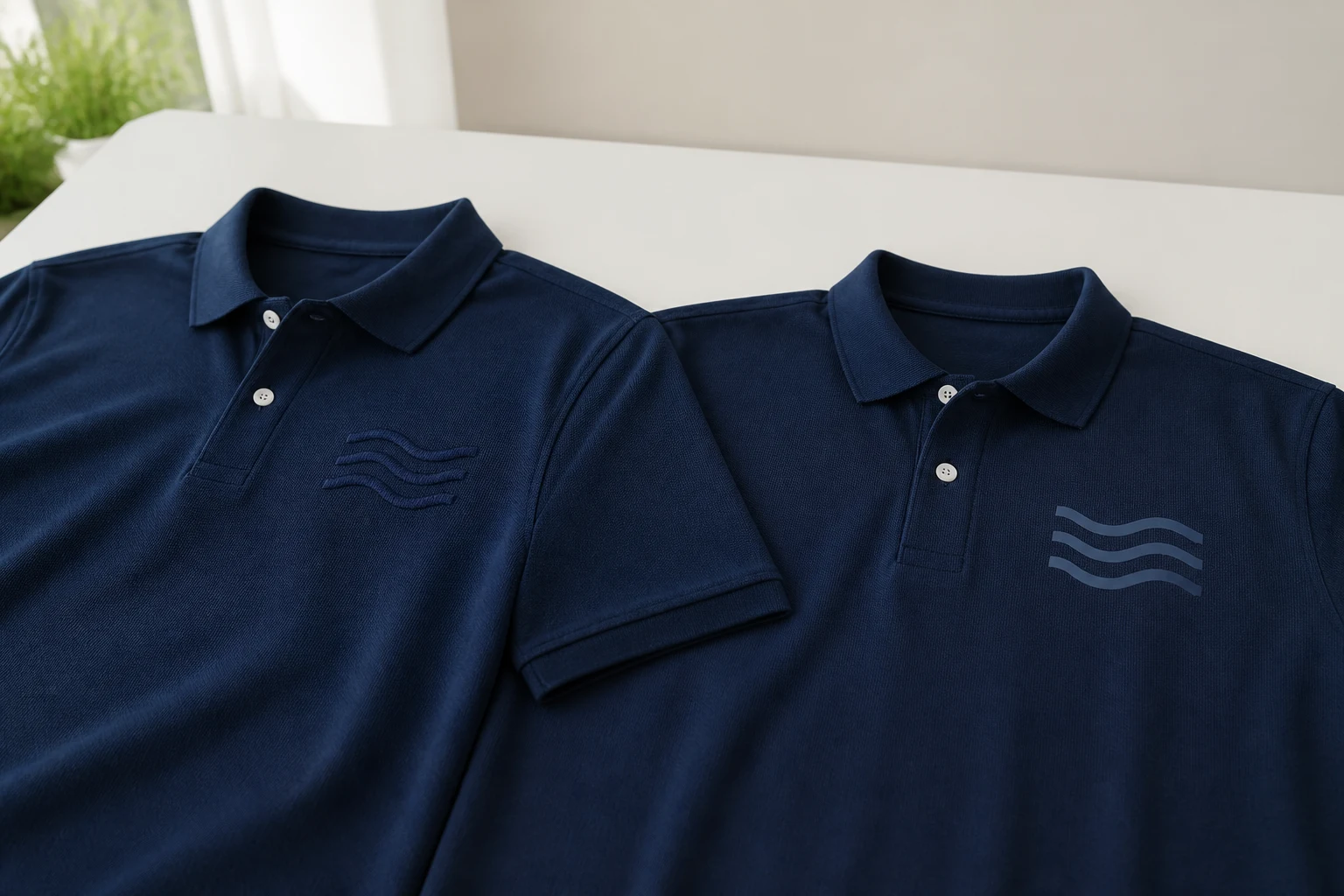
Light colours reflect more solar radiation; dark colours absorb it. For El Niño-season outdoor posts, navy and black look sharp in photos but raise radiant heat load. Many properties keep dark colours for indoor F&B and shift outdoor teams to lighter brand-approved shades — or use a light shirt with a darker branded vest only when guests are present.
4. Fit: loose enough to move air, tailored enough to look professional
Skin-tight fashion cuts block airflow. Occupational guidance prefers loose-fitting workwear for heat. For guest-facing roles, that means a proper size run and sampling — not “one size down for a sharper look.” Use our fit guide before bulk orders.
5. Two sets minimum in heat seasons
During hot-dry El Niño stretches, uniforms soak faster and laundry turnaround matters. One set forces staff to re-wear damp cloth — a comfort failure and a hygiene risk. Budget two full sets per outdoor worker before the season peaks.
Role-by-role quick picks
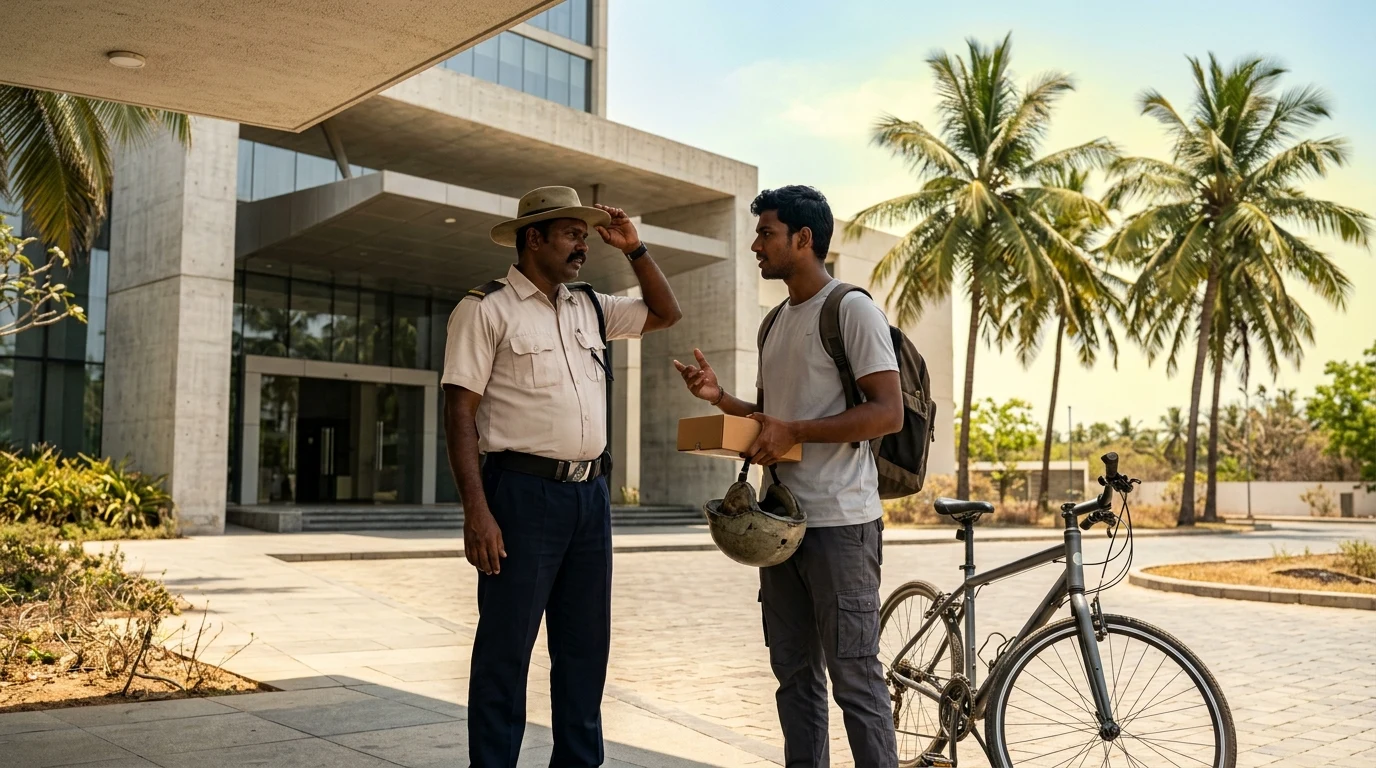
- Security / gate — breathable duty shirt or tactical polo; optional light jacket only for night AC lobbies. See security uniforms for hotels & events.
- Industrial / logistics — work shirt + hi-vis vest rather than a single heavy sealed layer when rules allow. Browse industrial workwear.
- Hospitality outdoor — lighter GSM shirts; keep structured vests for lobby only. See hotel uniforms by role.
- Field sales / delivery — moisture-managing polos (e.g. mid-weight pique) with a spare in the vehicle.
Uniforms are one control — not the whole heat plan
WHO, WMO and ILO guidance treats clothing as part of a wider heat-health system: drinking water, shaded rest, slower work rates in peak sun, training supervisors to spot heat illness, and acclimatising new or returning staff. A breathable uniform helps; a breathable uniform plus a 10-minute shade break and water helps far more.
Procurement checklist before the next hot season
- List every role with >2 hours outdoor or near radiant heat
- Specify blend %, GSM and colour on the quote — not only “smart shirt”
- Sample on a real afternoon shift, not only in the AC meeting room
- Order two sets + 10% spare in common sizes
- Train supervisors on heat symptoms the same week new uniforms arrive
Need heat-season uniforms for your team? Browse the catalogue, request a bulk quote, or call +94 77 771 3314 with headcount and outdoor vs indoor roles.
References
- USDA Foreign Agricultural Service. Grain and Feed Annual — Sri Lanka (2024): 2023 El Niño strengthening (July–September), dry Yala conditions, reservoir water capacity drops of around 60%. USDA FAS PDF
- Weathering Risk. Sri Lanka Climate Impact Profile — projected increases in Heat Index days above 35°C and tropical nights above ~26°C under warming scenarios. PDF
- WHO & WMO. Climate change and workplace heat stress / joint guidance on protecting workers from increasing heat stress (sweat evaporation as primary cooling; impermeable clothing as a risk factor). WHO news summary
- International Labour Organization. Heat awareness materials — heavy/impermeable clothing as a risk factor; recommend long, loose-fitting, lightweight, breathable clothing. ILO PDF
- ILO estimates cited in WHO/WMO communications: >2.4 billion workers exposed to excessive heat globally.
- Frontiers in Climate / MDPI Water studies on ENSO and Sri Lanka rainfall — ENSO impacts are season- and event-type dependent (plan for extremes, not a single rainfall outcome).